The Result
The Result
The project resulted in Value propositions, mobility personas and a handover of user study results n the shape of a needs and requirements list and a summary of user study data. Further details might be published in a report from Whim in 2021.
The project resulted in Value propositions, mobility personas and a handover of user study results n the shape of a needs and requirements list and a summary of user study data. Further details might be published in a report from Whim in 2021.
Reflections & Improvements
Reflections & Improvements
I find it important to reflect upon executed projects to evaluate my work and finds way of improving my work. One reflection I had on this project is that we narrowed down our target group too late which led to a very wide scope. Also, we found using mediating objects as being very helpful in this project but used them in a very late state of our progress which is something I bring to my next project. As well, we started our designing of Value propositions quite late after gathering and analysing the data. This lead to the iterative and evaluation phase of the design being short. Overall, I am very proud and happy with the work done in this project but of course, there are improvements to be made.
I find it important to reflect upon executed projects to evaluate my work and finds way of improving my work. One reflection I had on this project is that we narrowed down our target group too late which led to a very wide scope. Also, we found using mediating objects as being very helpful in this project but used them in a very late state of our progress which is something I bring to my next project. As well, we started our designing of Value propositions quite late after gathering and analysing the data. This lead to the iterative and evaluation phase of the design being short. Overall, I am very proud and happy with the work done in this project but of course, there are improvements to be made.
Project overview
Project overview
Process
The process of data collection, (figure further down on the site) was initiated with theoretical research with the purpose to generate insights from existing research. The theoretical research was followed by market research to create an understanding of active actors but also map potential aspects where current service providers are insufficient. The theoretical research and market research was also complemented with discussions with industry experts that have unique insight into MaaS. The process of understanding the users was initiated alongside theoretical research, market research and discussions with industry experts (figure further down on the site).
The process of data collection was initiated with theoretical research with the purpose to generate insights from existing research. The theoretical research was followed by market research to create an understanding of active actors but also map potential aspects where current service providers are insufficient. The theoretical research and market research was also complemented with discussions with industry experts that have unique insight into MaaS. The process of understanding the users was initiated alongside theoretical research, market research and discussions with industry experts.
Understanding the users was initiated through planning of the users studies which fueled the following steps. The following steps were: recruitment of users and screening of users.
The data generated by the user studies has been analysed through coding, then derived into user needs and requirements which then fueled the initial formulation of the value propositions.
Process
The process of data collection, (figure further down on the site) was initiated with theoretical research with the purpose to generate insights from existing research. The theoretical research was followed by market research to create an understanding of active actors but also map potential aspects where current service providers are insufficient. The theoretical research and market research was also complemented with discussions with industry experts that have unique insight into MaaS. The process of understanding the users was initiated alongside theoretical research, market research and discussions with industry experts (figure further down on the site).
The process of data collection was initiated with theoretical research with the purpose to generate insights from existing research. The theoretical research was followed by market research to create an understanding of active actors but also map potential aspects where current service providers are insufficient. The theoretical research and market research was also complemented with discussions with industry experts that have unique insight into MaaS. The process of understanding the users was initiated alongside theoretical research, market research and discussions with industry experts.
Understanding the users was initiated through planning of the users studies which fueled the following steps. The following steps were: recruitment of users and screening of users.
The data generated by the user studies has been analysed through coding, then derived into user needs and requirements which then fueled the initial formulation of the value propositions.

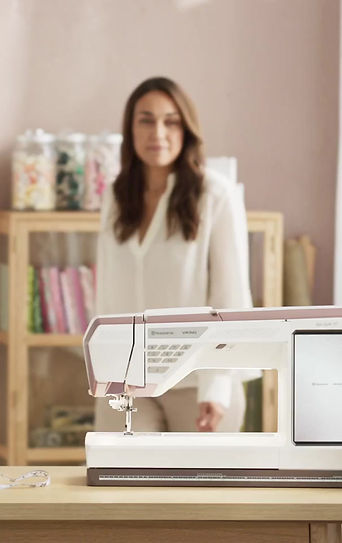
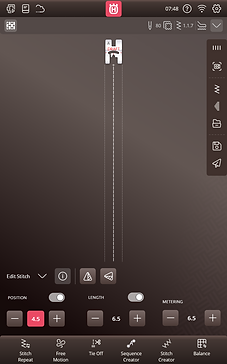
UI/UX for 12 Sewing machines in 2 years.
Read more
The Brief/Main responsibilities
Creating one unified Graphical User Interface and User Experience for several sewing & embroidery machines across multiple brands.

Project overview
I have been responsible for creating a unified User Experience across the three brands Singer, Husqvarna Viking and Pfaff. This resulted in me being responsible for the UX/UI for a major part of the computerized sewing machines produced or planned by Singer, Husqvarna Viking, Pfaff (owned by SVP Worldwide) during 2022-2024. I have been responsible for planning and executing the design process which has involved research, ideation and concept creation, testing and evaluating in a Scrum process.
The work has been executed cross-functionally within a small UX team in close collaboration with the Software developers, technical writers and experts users. Stakeholders have included head of marketing, head of design, product owners and project leaders.
A selection of methods used
-
Scrum/Lean UX design process, using Jira as support
-
Feedback sessions
-
Retrospective
-
Sprint plannings
-
etc.
-
-
User Journey Creation
-
Benchmarking & Competitor Analysis
-
High-Fi/Low-Fi prototyping using Adobe xd and Figma
-
User Research & Testing
-
Expert interviews
-
User tests
-
Observations
-
Qualitative Data Analysis through Dovetail
-
-
Stakeholder feedback sessions
Quilt Machine UI/UX Sneak peak