The Result
The Result
The project resulted in Value propositions, mobility personas and a handover of user study results n the shape of a needs and requirements list and a summary of user study data. Further details might be published in a report from Whim in 2021.
The project resulted in Value propositions, mobility personas and a handover of user study results n the shape of a needs and requirements list and a summary of user study data. Further details might be published in a report from Whim in 2021.
Reflections & Improvements
Reflections & Improvements
I find it important to reflect upon executed projects to evaluate my work and finds way of improving my work. One reflection I had on this project is that we narrowed down our target group too late which led to a very wide scope. Also, we found using mediating objects as being very helpful in this project but used them in a very late state of our progress which is something I bring to my next project. As well, we started our designing of Value propositions quite late after gathering and analysing the data. This lead to the iterative and evaluation phase of the design being short. Overall, I am very proud and happy with the work done in this project but of course, there are improvements to be made.
I find it important to reflect upon executed projects to evaluate my work and finds way of improving my work. One reflection I had on this project is that we narrowed down our target group too late which led to a very wide scope. Also, we found using mediating objects as being very helpful in this project but used them in a very late state of our progress which is something I bring to my next project. As well, we started our designing of Value propositions quite late after gathering and analysing the data. This lead to the iterative and evaluation phase of the design being short. Overall, I am very proud and happy with the work done in this project but of course, there are improvements to be made.
Project overview
Project overview
Process
The process of data collection, (figure further down on the site) was initiated with theoretical research with the purpose to generate insights from existing research. The theoretical research was followed by market research to create an understanding of active actors but also map potential aspects where current service providers are insufficient. The theoretical research and market research was also complemented with discussions with industry experts that have unique insight into MaaS. The process of understanding the users was initiated alongside theoretical research, market research and discussions with industry experts (figure further down on the site).
The process of data collection was initiated with theoretical research with the purpose to generate insights from existing research. The theoretical research was followed by market research to create an understanding of active actors but also map potential aspects where current service providers are insufficient. The theoretical research and market research was also complemented with discussions with industry experts that have unique insight into MaaS. The process of understanding the users was initiated alongside theoretical research, market research and discussions with industry experts.
Understanding the users was initiated through planning of the users studies which fueled the following steps. The following steps were: recruitment of users and screening of users.
The data generated by the user studies has been analysed through coding, then derived into user needs and requirements which then fueled the initial formulation of the value propositions.
Process
The process of data collection, (figure further down on the site) was initiated with theoretical research with the purpose to generate insights from existing research. The theoretical research was followed by market research to create an understanding of active actors but also map potential aspects where current service providers are insufficient. The theoretical research and market research was also complemented with discussions with industry experts that have unique insight into MaaS. The process of understanding the users was initiated alongside theoretical research, market research and discussions with industry experts (figure further down on the site).
The process of data collection was initiated with theoretical research with the purpose to generate insights from existing research. The theoretical research was followed by market research to create an understanding of active actors but also map potential aspects where current service providers are insufficient. The theoretical research and market research was also complemented with discussions with industry experts that have unique insight into MaaS. The process of understanding the users was initiated alongside theoretical research, market research and discussions with industry experts.
Understanding the users was initiated through planning of the users studies which fueled the following steps. The following steps were: recruitment of users and screening of users.
The data generated by the user studies has been analysed through coding, then derived into user needs and requirements which then fueled the initial formulation of the value propositions.

The Brief/Main responsibilities
Creating a hybrid brand design system with components as well as detailed design specifications and strategy.

Project overview
In this project we created a hybrid brand design system with support for different theming. We also defined strategies for how to maintain and develop the design system over time.
1.
We started off with research on how to create the best hybrid brand design system setup in Figma, really spending time on mastering all the latest Figma quirks.
2.
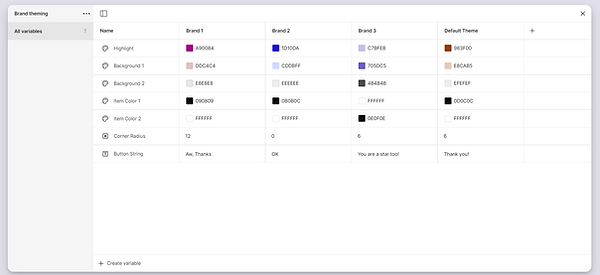
Thereafter we started creating local variables to support different brands and theming. This included different colors, corner radiuses etc. This was done through using aliases for the colors such as Background1 and assigning different colors to Background1 depending on brand and theme. See image below, due to corporate confidentiality the image below is a much simpler fictive example and not the real work.
3.
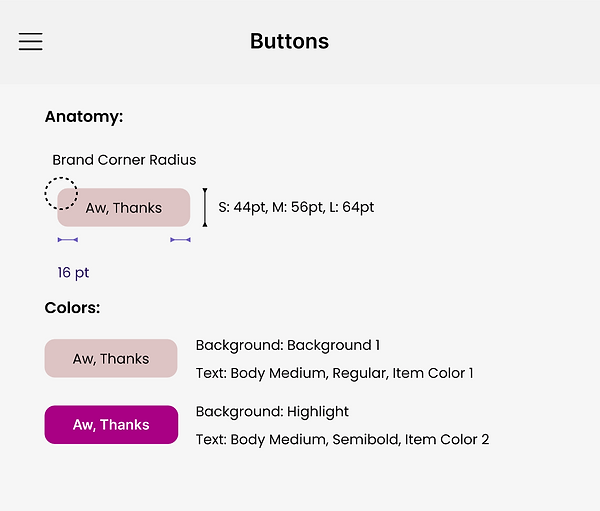
Next, we created components such as buttons and menus which were assigned these aliases. Later on we created detailed specifications which described component structures, margins, screen considerations, color guide, font guide, brand guidelines etc which was published internally within the company for use for software developers, marketing and the UX team.
Due to corporate confidentiality the image below is a much simpler fictive example and not the real work.