The Result
The Result
The project resulted in Value propositions, mobility personas and a handover of user study results n the shape of a needs and requirements list and a summary of user study data. Further details might be published in a report from Whim in 2021.
The project resulted in Value propositions, mobility personas and a handover of user study results n the shape of a needs and requirements list and a summary of user study data. Further details might be published in a report from Whim in 2021.
Reflections & Improvements
Reflections & Improvements
I find it important to reflect upon executed projects to evaluate my work and finds way of improving my work. One reflection I had on this project is that we narrowed down our target group too late which led to a very wide scope. Also, we found using mediating objects as being very helpful in this project but used them in a very late state of our progress which is something I bring to my next project. As well, we started our designing of Value propositions quite late after gathering and analysing the data. This lead to the iterative and evaluation phase of the design being short. Overall, I am very proud and happy with the work done in this project but of course, there are improvements to be made.
I find it important to reflect upon executed projects to evaluate my work and finds way of improving my work. One reflection I had on this project is that we narrowed down our target group too late which led to a very wide scope. Also, we found using mediating objects as being very helpful in this project but used them in a very late state of our progress which is something I bring to my next project. As well, we started our designing of Value propositions quite late after gathering and analysing the data. This lead to the iterative and evaluation phase of the design being short. Overall, I am very proud and happy with the work done in this project but of course, there are improvements to be made.
Project overview
Project overview
Process
The process of data collection, (figure further down on the site) was initiated with theoretical research with the purpose to generate insights from existing research. The theoretical research was followed by market research to create an understanding of active actors but also map potential aspects where current service providers are insufficient. The theoretical research and market research was also complemented with discussions with industry experts that have unique insight into MaaS. The process of understanding the users was initiated alongside theoretical research, market research and discussions with industry experts (figure further down on the site).
The process of data collection was initiated with theoretical research with the purpose to generate insights from existing research. The theoretical research was followed by market research to create an understanding of active actors but also map potential aspects where current service providers are insufficient. The theoretical research and market research was also complemented with discussions with industry experts that have unique insight into MaaS. The process of understanding the users was initiated alongside theoretical research, market research and discussions with industry experts.
Understanding the users was initiated through planning of the users studies which fueled the following steps. The following steps were: recruitment of users and screening of users.
The data generated by the user studies has been analysed through coding, then derived into user needs and requirements which then fueled the initial formulation of the value propositions.
Process
The process of data collection, (figure further down on the site) was initiated with theoretical research with the purpose to generate insights from existing research. The theoretical research was followed by market research to create an understanding of active actors but also map potential aspects where current service providers are insufficient. The theoretical research and market research was also complemented with discussions with industry experts that have unique insight into MaaS. The process of understanding the users was initiated alongside theoretical research, market research and discussions with industry experts (figure further down on the site).
The process of data collection was initiated with theoretical research with the purpose to generate insights from existing research. The theoretical research was followed by market research to create an understanding of active actors but also map potential aspects where current service providers are insufficient. The theoretical research and market research was also complemented with discussions with industry experts that have unique insight into MaaS. The process of understanding the users was initiated alongside theoretical research, market research and discussions with industry experts.
Understanding the users was initiated through planning of the users studies which fueled the following steps. The following steps were: recruitment of users and screening of users.
The data generated by the user studies has been analysed through coding, then derived into user needs and requirements which then fueled the initial formulation of the value propositions.


The Brief
The brief was to investigate the possibility to reduce the transmission of Hepatitis C through the reuse of injection material among people who inject drugs.
The Result
The Solution - CollectOne
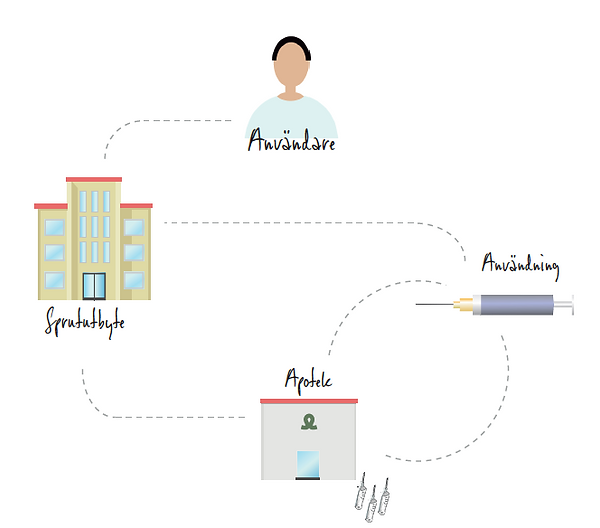
The final solutions is a combination of a service and a product with the collective name of CollectOne. The service, Collect, is the possibility to get perscripted injection material to pick up at any pharmacy in Gothenburg. Through this solution, the availability of new and sterile injection materials will increase drastically.
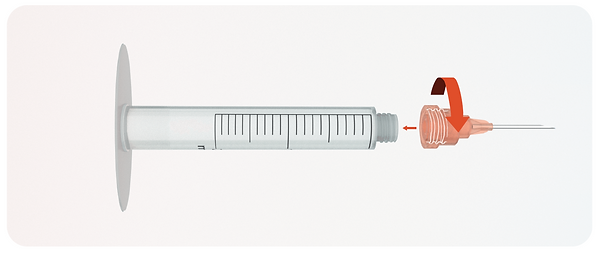
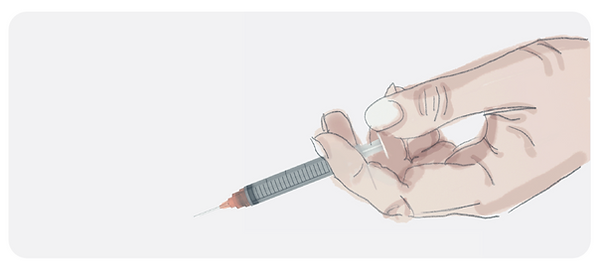
The product, One, is a syrenge designed to only be funcioning for one use. The syrenge would be available at the pharmacys as well as at the syrenge exchange clinic. The syrenge has a small cylinder attached to the plunger that is pushed down to the bottom and get stucks when the liquid is injected.
Since the users will be creative in trying to reuse the syrenge, it is designed to not harm the user even if it is reused or misused.
The Bachelor thesis:
https://odr.chalmers.se/handle/20.500.12380/256698

Project overview
The process
The project was divided in to three main phases:
-
Gathering of data, which carried on throughout the project
-
Ideation
-
Evaluation
The stakeholders to adress were mainly focused on the people who inject drugs but also the caregivers related to them and the Sahlgrenska University Hospital.
Methods
-
Expert interviews
-
KRIS (Kriminellas Revansch i Samhället)
-
Substance Abuse Therapeuts
-
Hepatitis C & Transmission disease Experts
-
-
Attending a Hepatitis C conference
-
Literature reviews
-
Surveys
-
Visit/Observation at syrenge exchanges, clinics for homeless & Narcotics Anonymlous (NA)
Key findings
Hepatitis C is mainly transmitted through sharing of injection materials among people who inject drugs. This is due to the lack of new injection materials to use for drug injection purposes. Therefore, old material is reused or shared or illegal material is bought which could be infected. In Gothenburg there is one clinic open one weekdays from 9-16 where users can get free injection materials. However, for a group of users that has problems with order and time the opening hours is an issue. Internationally these clinics have been a success to reduce the transmission of Hepatitus C and HIV but legislations in Sweden makes it difficult to copy the method (open more clinics).
The users have problems with time and order, their financial and general living situation and ignorance towards Hepatitis C.
Further issues are Sweden's attitude towards drugs and drug users and the restrictive drug politics in Sweden.


Reflections & Improvements
In this project we evaluated our process and design proposals with users, however the amount and diversity of users were not as good as it could have been. As well, I would have used users as a bigger part of a co-creational process. Furthermore, I would have done further benchmarking early on in the project since we found really useful inspiration in projects done internationally. Lastly, I would have chosen to work in faster, more agile phases and prototype the design proposals earlier through for example 3D-printing.